
1
Curious builder0 XP earned · 300 to level 2
0 daysFinish a lesson to begin
Badge collection0 of 6 unlocked
51 small wins to finish your pathNext question →
What are the core components of an agent?
30-second answerSay your answer out loud first, then reveal.
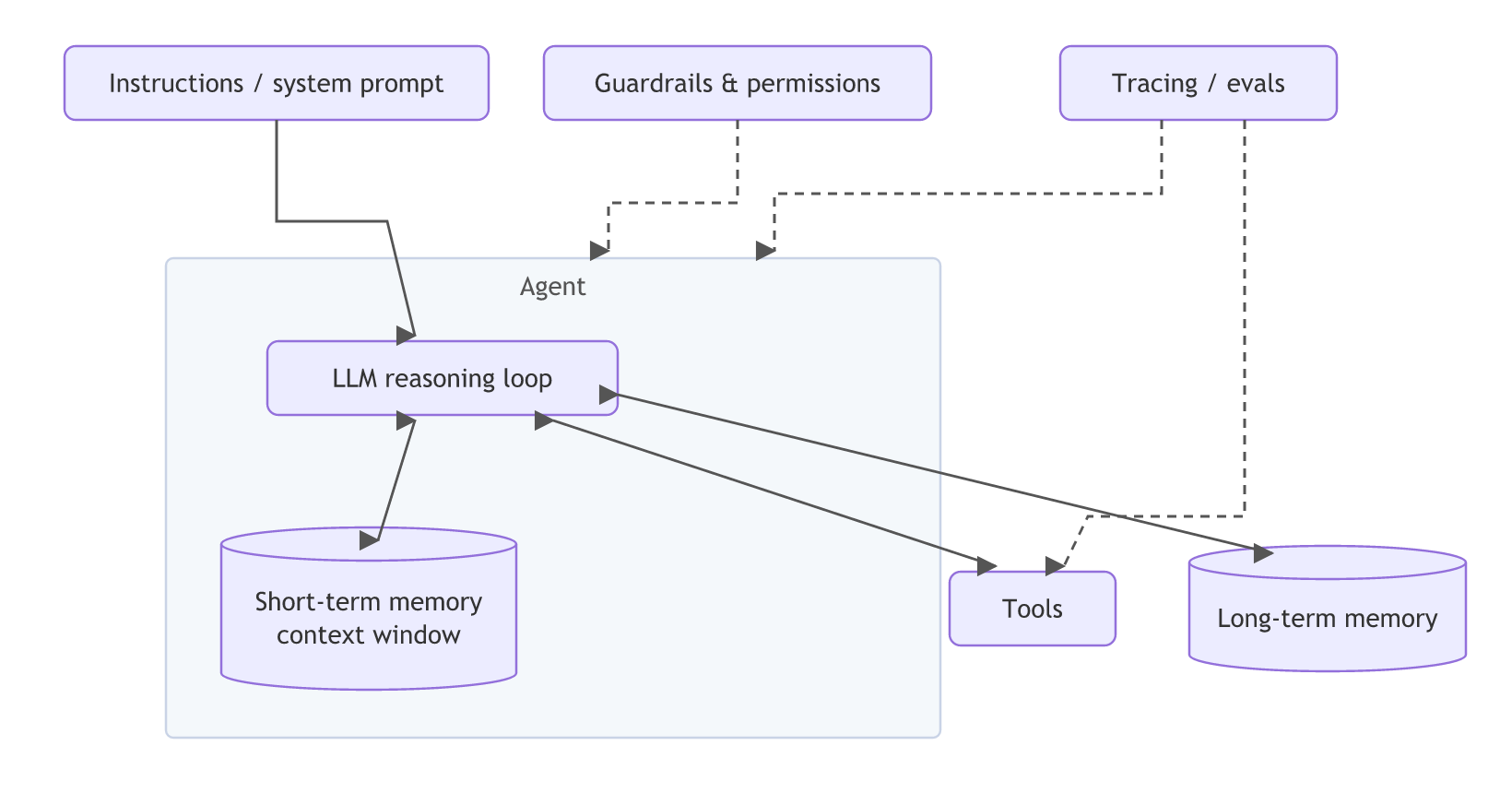
- Model. The LLM that reasons and decides. Choice affects tool-use reliability, latency and cost. Many systems mix models, e.g. a strong model for planning and a cheap one for simple sub-tasks.
- Instructions. The system prompt defines role, goal, constraints, tone, when to ask for help, and when to stop.
- Tools. Functions the agent can call: retrieval, APIs, code execution, browser, other agents.
- Memory.
• Short-term: the current conversation and scratchpad (the context window).
• Long-term: facts, user preferences and past episodes stored externally (vector DB, key-value store) and retrieved when relevant. - Planning / orchestration. The loop logic: ReAct, plan-and-execute, graph-based state machines, max steps, retries.
- Guardrails. Input/output filtering, tool permission checks, human approval for risky actions, PII handling.
- Production layer. State checkpointing (resume after crash), tracing (see every step), evaluation, cost tracking.
Common mistakes
- Listing only "LLM + tools + memory" and forgetting guardrails and observability, which is what separates a demo from production.
Follow-ups to expect
- Which component fails most often in production? A good answer is tools and context, not the model.
Related
Every expert started right here.