
1
Curious builder0 XP earned · 300 to level 2
0 daysFinish a lesson to begin
Badge collection0 of 6 unlocked
51 small wins to finish your pathNext question →
Design a "deep research" agent that produces a cited report on any topic.
30-second answerSay your answer out loud first, then reveal.
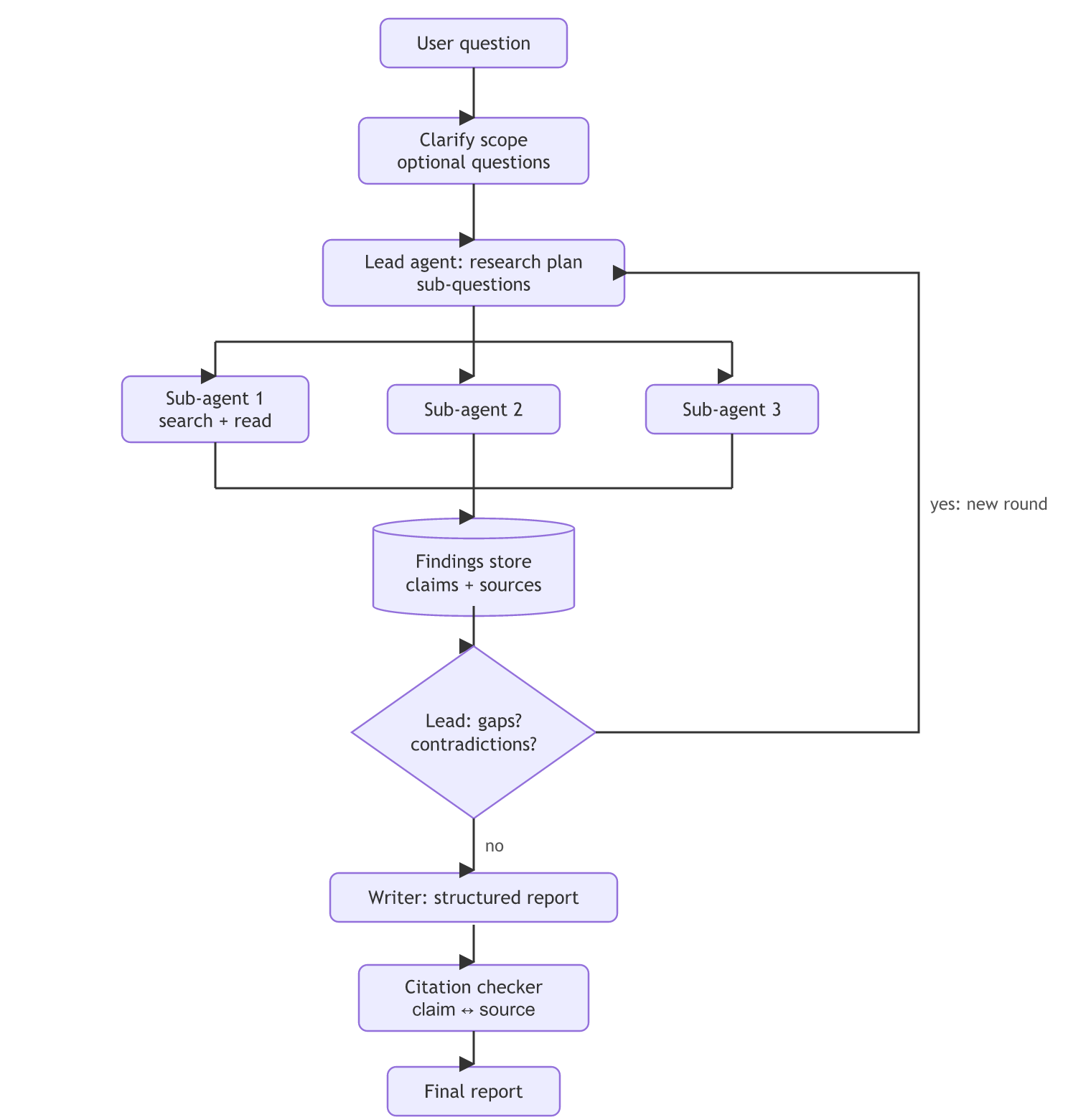
Design details
- Planning: break the question into 3–8 sub-questions; scale effort to the query (a simple fact needs 1 agent, a market analysis needs 5+). Without explicit effort scaling, agents over-research simple queries.
- Sub-agent briefs: objective, scope boundaries, preferred source types, output format (claims + URLs + quotes), and a tool-call budget.
- Search strategy: start broad, then narrow; prefer primary sources; record dates for freshness.
- Findings store: keep findings outside the lead's context (files or a DB). The lead reads summaries, which keeps its context manageable over long runs.
- Synthesis: resolve conflicting sources explicitly ("Source A says X; B says Y; B is more recent").
- Citations: every claim links to a source. The verification pass checks that the source actually supports the claim, which catches hallucinated citations.
- Durability: runs take minutes, so use checkpoints and resume. Return asynchronously with progress updates.
Costs and trade-offs: multi-agent research uses many more tokens than chat. It's worth it for high-value queries, not for "what's the capital of France". Add a router.
Evaluation: rubric-based judging (accuracy, completeness, source quality, citation correctness), checks against a set of known-answer questions, and human expert review for a sample.
Related
Slow is fine. Stopping is the only problem.