
1
Curious builder0 XP earned · 300 to level 2
0 daysFinish a lesson to begin
Badge collection0 of 6 unlocked
51 small wins to finish your pathNext question →
Compare planning strategies: ReAct, Plan-and-Execute, and Reflection.
30-second answerSay your answer out loud first, then reveal.
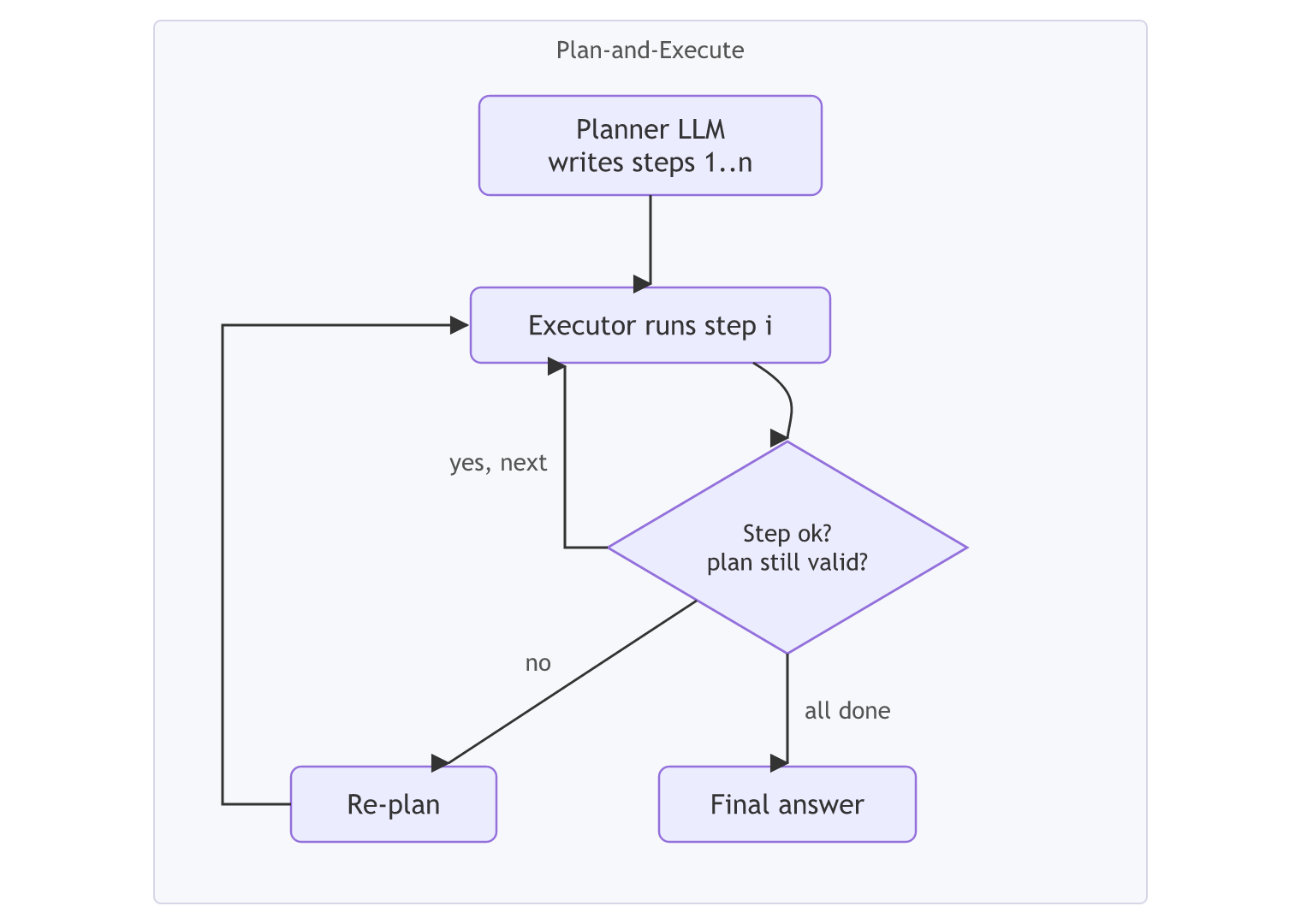
| ReAct | Plan-and-Execute | Reflection | |
|---|---|---|---|
| Planning horizon | One step | Whole task | Across attempts |
| Strength | Adapts to surprises | Coherent long tasks, cheaper executors | Learns from failures |
| Weakness | Drifts, repeats, no big picture | Plans go stale; needs re-planning | Extra calls; critic can be wrong |
| Good for | Short interactive tasks | Multi-step research, ETL-like jobs | Code (tests as signal), writing with rubric |
Practical hybrid: most production agents keep a lightweight, editable plan, often a to-do list in context or a file, and execute it ReAct-style, updating the list as they learn. Coding agents work this way, and so does LangChain's "Deep Agents" pattern.
Reflection caveat: self-critique without external feedback is limited. A model reviewing its own answer often approves it. Reflection works best when it is grounded in a signal: test failures, a validator, retrieved evidence, or a separate judge with a rubric.
Follow-ups to expect
- How would you decide when to re-plan? (When a step fails, new information contradicts plan assumptions, or every N steps.)
Related
Little by little, you're building something great.