
1
Curious builder0 XP earned · 300 to level 2
0 daysFinish a lesson to begin
Badge collection0 of 6 unlocked
51 small wins to finish your pathNext question →
Name the common agentic design patterns and when to use each.
30-second answerSay your answer out loud first, then reveal.
| Pattern | How it works | Use when | Example |
|---|---|---|---|
| Prompt chaining | Output of step 1 → input of step 2, with optional checks between | Task splits into fixed steps | Outline → draft → translate |
| Routing | Classifier sends input to a specialised path | Distinct input categories | Billing vs tech support vs refund |
| Parallelization | Run sub-tasks simultaneously (sectioning) or the same task several times (voting) | Independent parts, or you need confidence | Guardrail check in parallel with answer; 3 votes on code vulnerability |
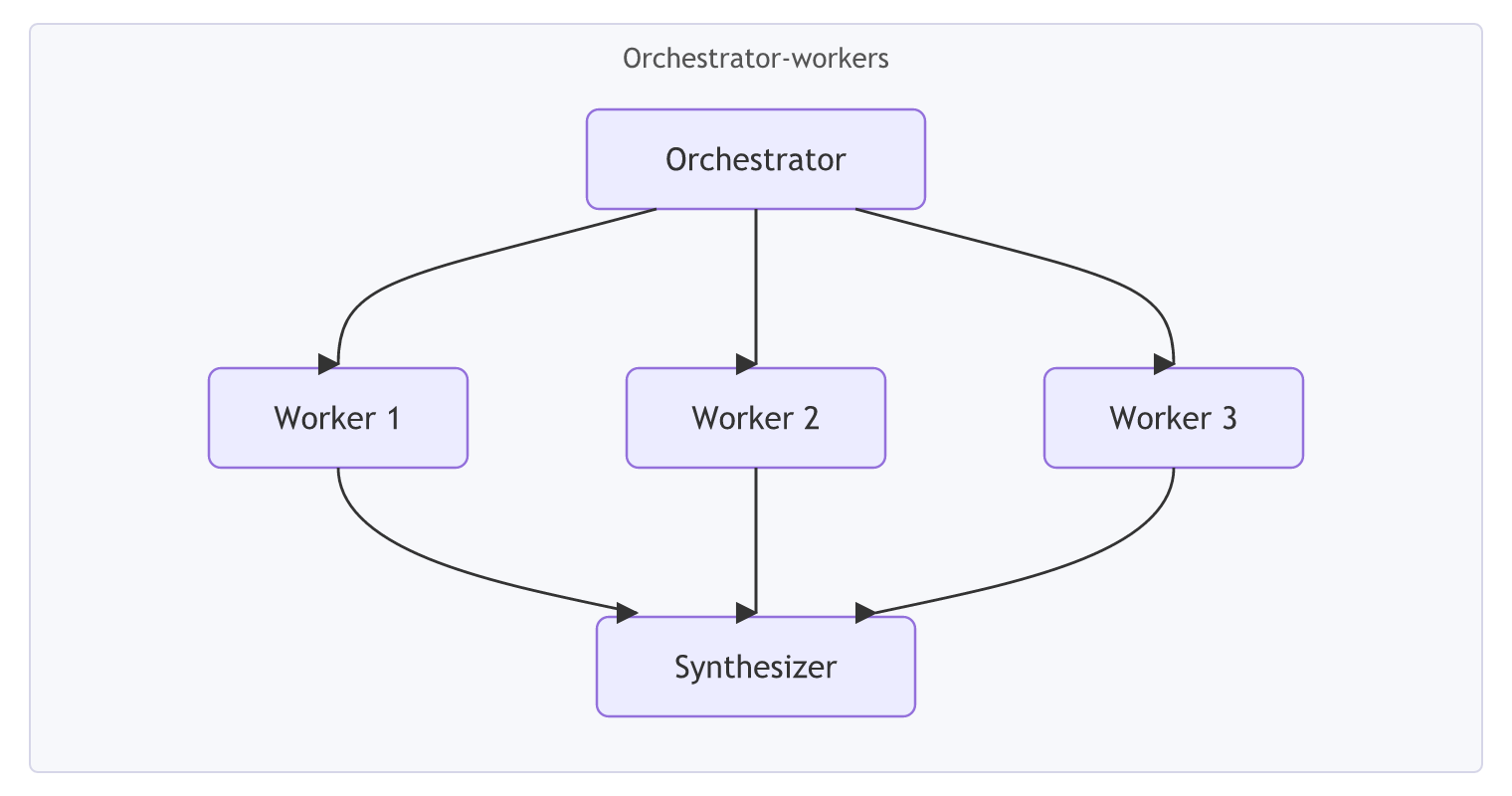
| Orchestrator-workers | Lead LLM decides subtasks at runtime and delegates | Subtasks unknown upfront | Code change touching unknown files; research |
| Evaluator-optimizer | One LLM generates, another critiques, loop | Clear quality criteria, iteration helps | Translation polishing; code until tests pass |
| Autonomous agent | LLM + tools in open loop | Open-ended, unpredictable steps | Coding agent, ops troubleshooting |
Key insight: these compose. A production support system might route first, run a chained workflow for refunds, and an agent loop for technical troubleshooting, with an evaluator checking the final reply.
Follow-ups to expect
- Orchestrator-workers vs parallelization? Parallelization's subtasks are predefined. The orchestrator decides them dynamically.
Related
This is what real progress feels like.