
1
Curious builder0 XP earned · 300 to level 2
0 daysFinish a lesson to begin
Badge collection0 of 6 unlocked
51 small wins to finish your pathNext question →
Design a system where a fraud-detection ML model flags transactions and an LLM helps investigators understand and resolve cases.
30-second answerSay your answer out loud first, then reveal.
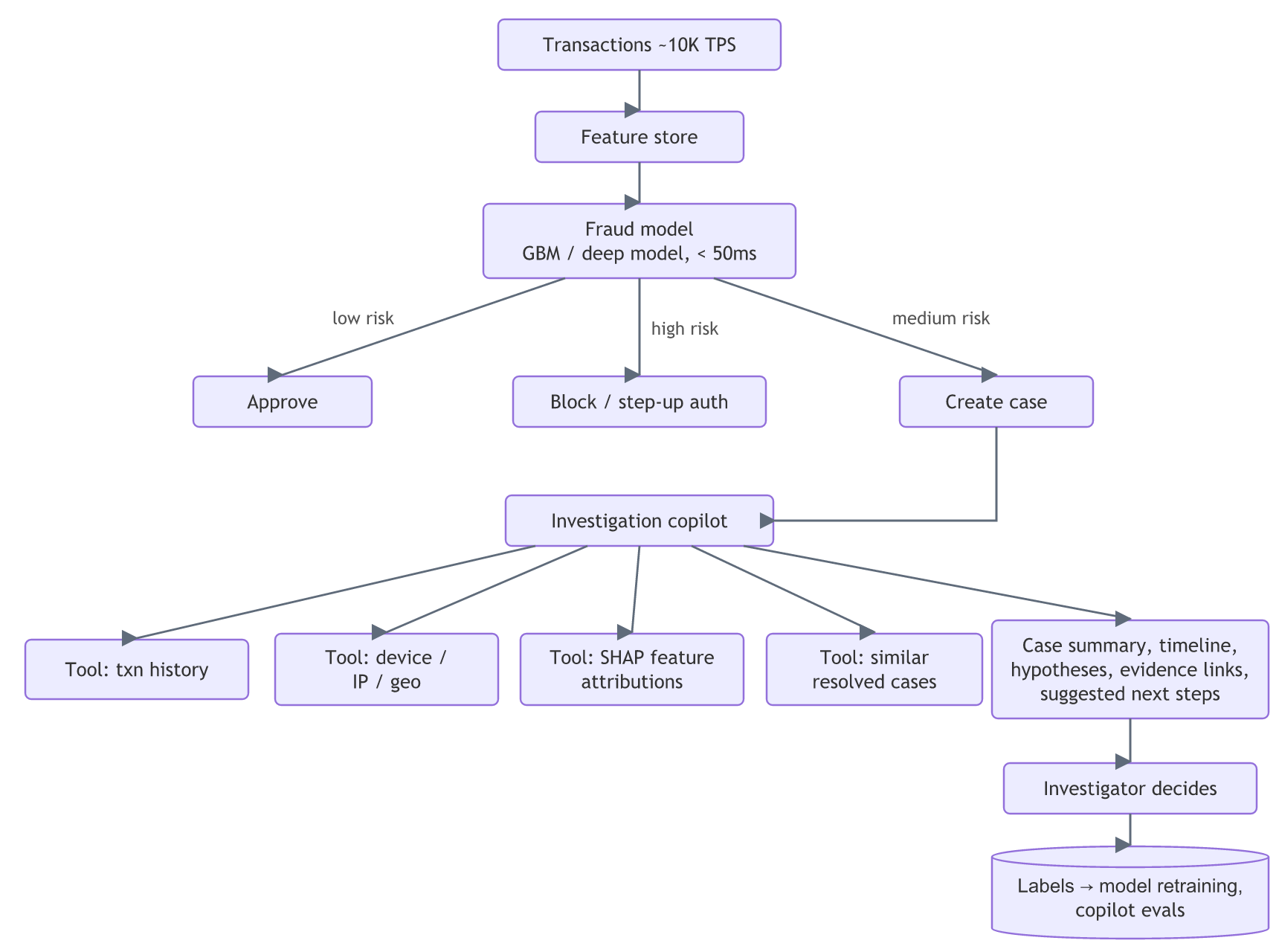
Why this split
- Real-time scoring needs millisecond latency at massive volume, plus calibrated, auditable scores. Classical ML fits this.
- Investigations involve reading heterogeneous evidence and writing narratives. LLMs fit this and save investigator time.
Copilot design details
- Structured output: timeline, risk indicators, each with a source reference (record IDs).
- Faithfulness: numbers are pulled by tools and rendered by code, not generated by the LLM. Every claim links to evidence.
- Explanations: convert model attributions (SHAP) into plain language: "Flagged mainly due to a new device + transaction amount 12x the customer's average + high-risk merchant category."
- Compliance: draft SAR/STR narratives for human review; full audit logs; data access restricted by role.
- Security: treat transaction descriptions and merchant names as untrusted (prompt injection risk).
Metrics: investigation time per case, decision accuracy (vs QA review), backlog size, investigator satisfaction, false positive handling time.
Related
Every expert started right here.