
1
Curious builder0 XP earned · 300 to level 2
0 daysFinish a lesson to begin
Badge collection0 of 6 unlocked
51 small wins to finish your pathNext question →
Design a pipeline that extracts structured data from invoices (PDFs, scans, emails) for an accounts-payable system.
30-second answerSay your answer out loud first, then reveal.
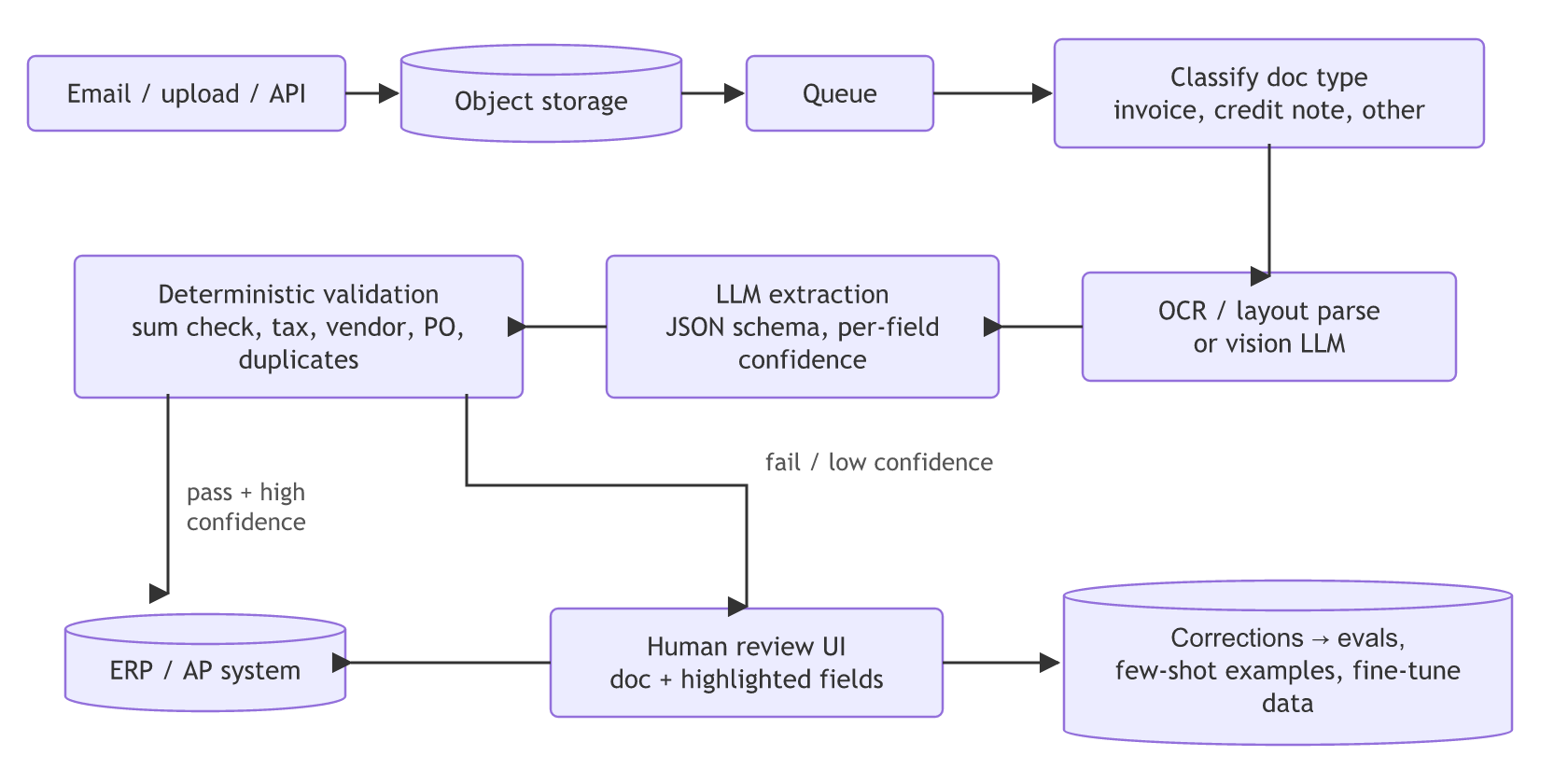
Deep-dive points
- Schema: vendor, GSTIN/VAT ID, invoice number, dates, currency, line items (description, qty, unit price, tax), totals. Use enums and formats.
- Extraction approach: text-based LLM on OCR output (cheaper) vs vision LLM on page images (better on complex layouts). Route by document quality.
- Grounding: ask for the source text span or bounding box per field so reviewers can verify quickly.
- Validation is key: line items × quantities must equal the subtotal, subtotal + tax = total, due date after invoice date. Validation catches most extraction errors without a human.
- Vendor-specific memory: few-shot examples from that vendor's previously corrected invoices improve accuracy.
- Throughput: batch processing, parallel workers, retries, idempotency by file hash.
- Security: financial documents need encryption, access control and audit trails.
Metrics: field-level accuracy, straight-through processing rate (no human touch), review time per document, cost per document.
Related
You understood something today that you didn't yesterday.