
1
Curious builder0 XP earned · 300 to level 2
0 daysFinish a lesson to begin
Badge collection0 of 6 unlocked
51 small wins to finish your pathNext question →
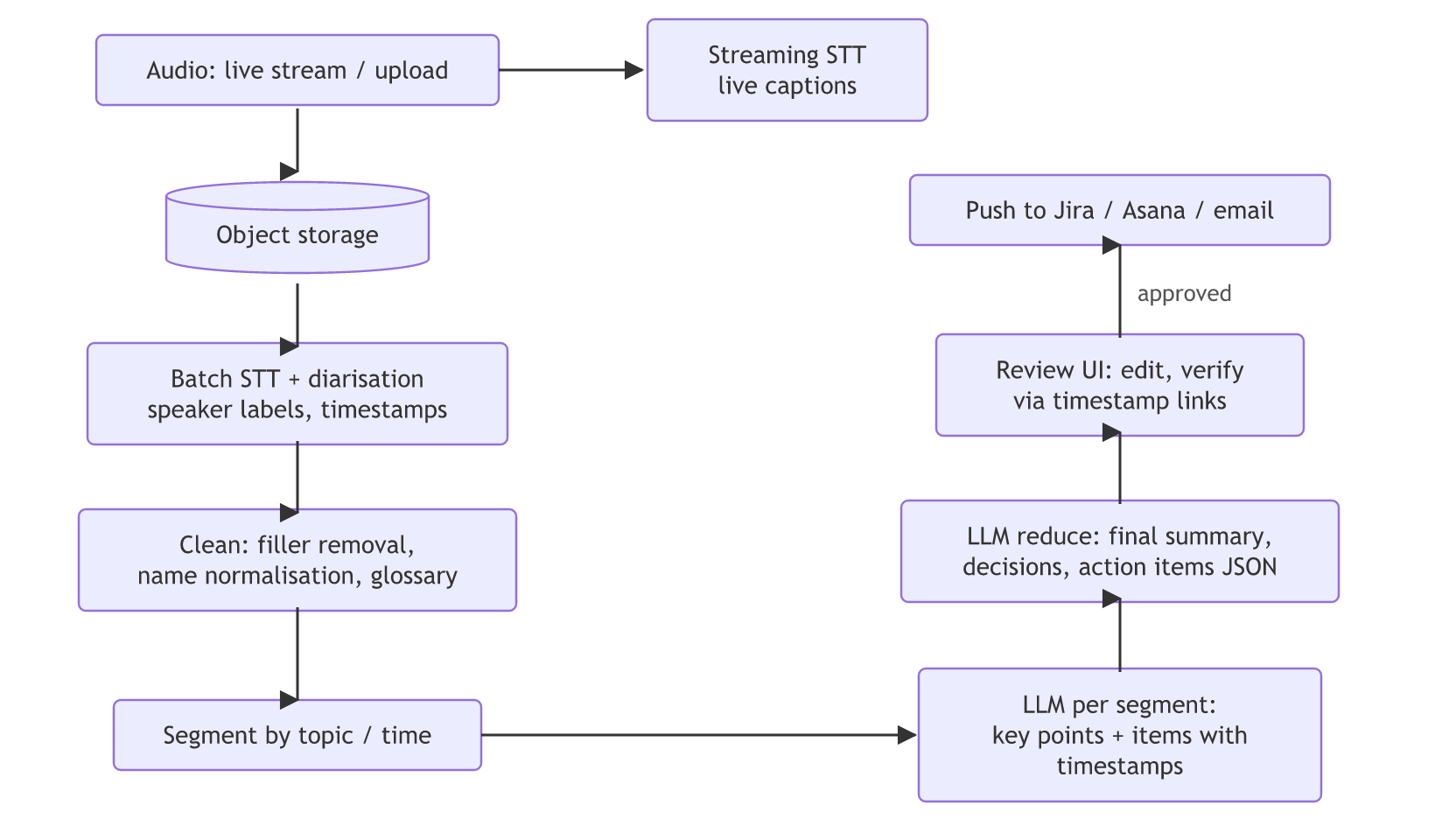
Design a meeting summarisation system: audio → transcript → summary → action items.
30-second answerSay your answer out loud first, then reveal.
Deep dives
- STT quality: accents, code-mixed Hindi/English, domain jargon. Use a custom vocabulary or glossary (product names, people), and evaluate word error rate per language.
- Diarisation: "who said what" matters for action-item owners. Map speakers to calendar attendees, and let users fix labels.
- Long meetings: a 1-hour meeting is ~10K words ≈ 13K+ tokens. It may fit in context, but hierarchical summarisation improves structure and allows parallel processing.
- Faithfulness: every action item links to a timestamp. Instruct the model not to invent owners or dates ("owner: unassigned" if unclear).
- Privacy and consent: recording notices, retention policies, access limited to attendees, redaction of sensitive segments, data residency.
- Latency: summary within ~1–2 minutes after the meeting ends is usually acceptable, so batch processing is fine.
Metrics: action-item precision and recall (vs human notes), user edit rate, ratings, adoption.
Related
Every expert started right here.