
1
Curious builder0 XP earned · 300 to level 2
0 daysFinish a lesson to begin
Badge collection0 of 6 unlocked
51 small wins to finish your pathNext question →
Design the safety and abuse-prevention architecture for a public, free-to-use generative AI app.
30-second answerSay your answer out loud first, then reveal.
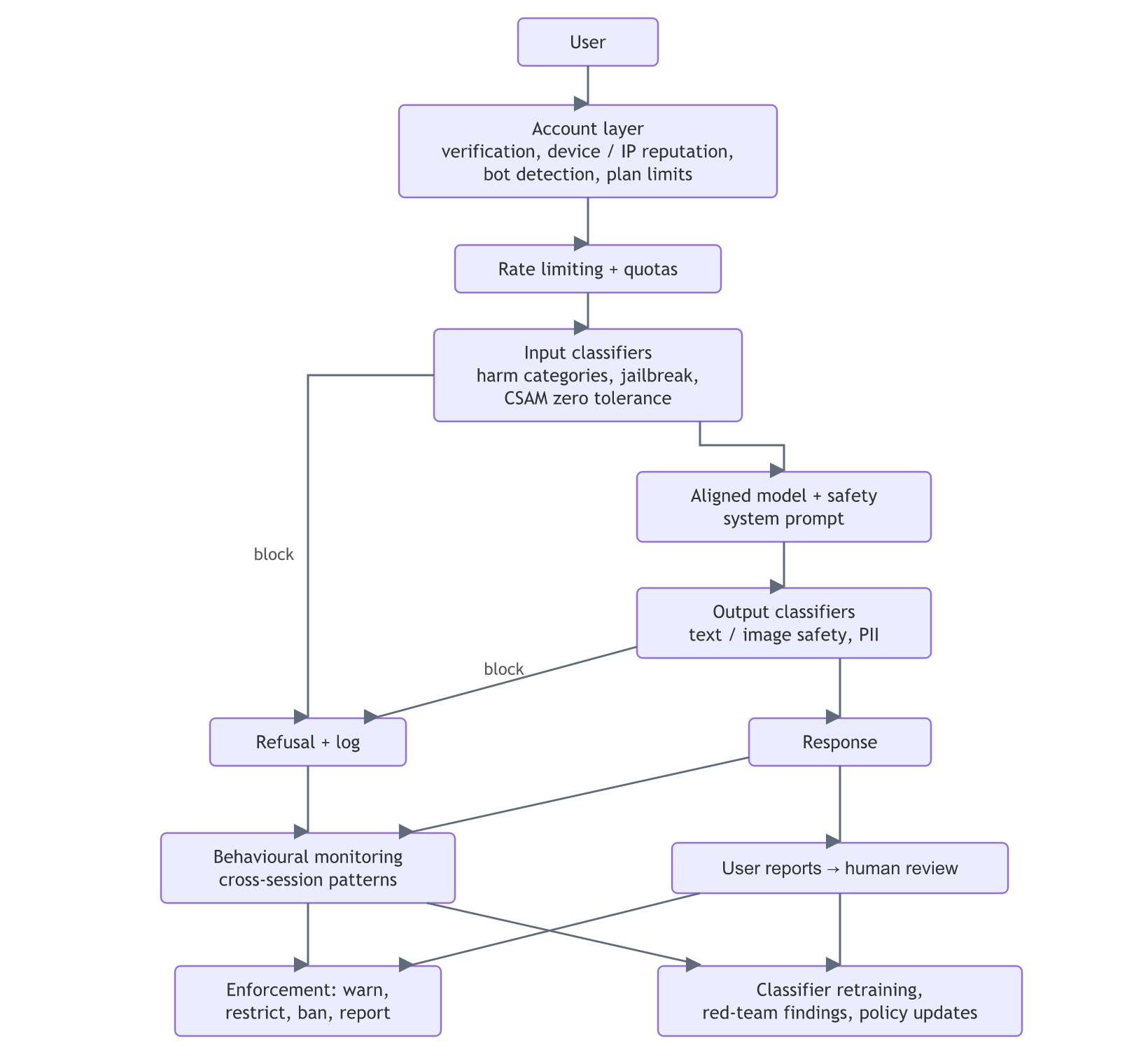
Key design considerations
- Severity tiers: some categories are zero tolerance with legal reporting obligations (e.g. child sexual abuse material), others are context-dependent (medical or security education). Policies define each tier.
- Account-level signals catch what single requests can't: many borderline requests in sequence, automated scraping, coordinated misuse.
- Latency vs safety: fast classifiers inline; heavier analysis asynchronous (can lead to later account action).
- Image/media generation: prompt filtering + output image classifiers + provenance (watermarking, content credentials metadata).
- Over-refusal: track false refusal rate on benign test sets; overly strict filters push users away.
- Red-teaming: internal and external, before launches and continuously; adversarial test suites in CI.
- Privacy: safety logging balanced with data minimisation; access controls for reviewers.
- Incident response: playbooks for viral jailbreaks, quick classifier or prompt hotfixes, communication plans.
Related
- Previous: Q47. Your company debates building its own LLM stack vs buying a vendor platform (or using a single model provider end to end). How do you guide the decision?
- Next: Q49. Design an observability and tracing platform for LLM applications handling billions of spans per day.
- NeMo Guardrails
- Guardrails AI
Slow is fine. Stopping is the only problem.