
The backend, and a real audit run
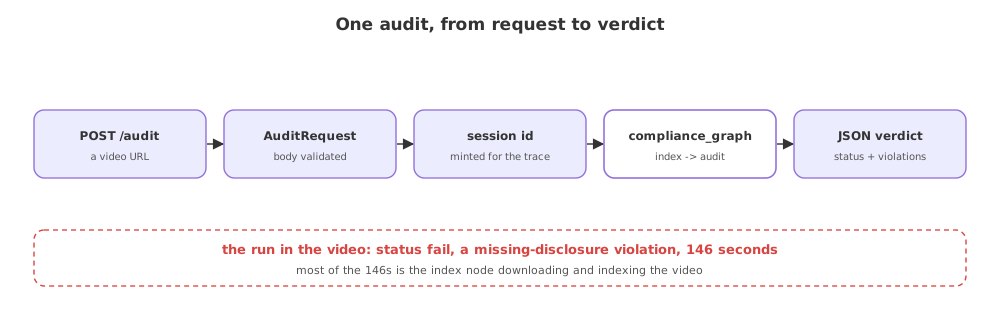
The project ends at a FastAPI backend. A request carries a video URL, the endpoint runs the compiled compliance graph, and the response is a session ID, the video ID and a pass-or-fail status with the violations found. One real run in the video took 146 seconds and came back failed.
Last updated: 15 Oct, 2026 · LLMOps
Observing the project wired the monitoring. This lesson is the surface everything sits behind: the API that takes a URL and returns a verdict, and what one real audit looks like end to end.
The endpoint
from fastapi import FastAPI
from pydantic import BaseModel
import uuid
from graph.workflow import app as compliance_graph   # aliased, so it does not clash with the FastAPI app

app = FastAPI(title="Brand Guardian AI API")

class AuditRequest(BaseModel):
    video_url: str

@app.post("/audit")
def audit(req: AuditRequest):
    session_id = str(uuid.uuid4())           # one id per audit, for the trace
    final = compliance_graph.invoke({"video_url": req.video_url})
    return {
        "session_id": session_id,
        "video_id": final.get("video_id"),
        "status": final["status"],
        "violations": final["compliance_results"],
    }
The endpoint validates the body into an AuditRequest, mints a session ID so one audit can be found in the traces, invokes the compiled graph, and returns the verdict. The graph is imported aliased as compliance_graph so it does not clash with the FastAPI app, a detail the video calls out.
One real run
{
  "session_id": "7f3a...",
  "video_id": "a1b2c3",
  "status": "fail",
  "violations": [
    {
      "category": "FTC disclosure",
      "severity": "critical",
      "description": "The paid partnership is not disclosed in the first frames or the caption."
    }
  ]
}
The run the video shows comes back failed, with a missing-disclosure violation, after 146 seconds. That latency is the whole round trip: upload the URL, download the video, index it, retrieve the rules, judge, and return, which is why indexing is where the time goes and why the result is worth tracing.
Related
- Previous: Observing the project in production
- See also: The app entry point and its API
- See also: Controlling the cost of API calls
- Redesign the endpoint so a 146-second audit is a job the client polls, not a request it blocks on.
- Explain what the session ID buys you when a user reports a wrong verdict an hour later.
This is what real progress feels like.