
The project: a video compliance auditor
BrandGuardian is the project this course ends on: it takes the URL of a brand or influencer video, reads what the video says and shows, and checks it against a set of advertising rules, returning every violation it finds. The video calls it an Azure multimodal compliance orchestration engine, built with LangGraph and LangSmith.
Last updated: 15 Oct, 2026 · LLMOps
Swapping the stand-ins for the real thing ended the hands-on thread on a keyless shop assistant you could run. This part is the other half: a full production project, operated the way the rest of the course describes, shown end to end. It runs on Azure and needs an account, so it is walked through rather than run here, the same as the deployment lessons.
What it audits, and why
The rules come from two PDFs the video uses as the guiding documents: FTC guidance on influencer advertising, the kind that says a paid promotion has to be disclosed. The job is to take a video ad and decide whether it follows those rules: is the disclosure there, are the claims it makes allowed. A human reviewer doing this reads the rules, watches the ad, and writes up what is missing. BrandGuardian does the same three steps in software.
The shape of the system
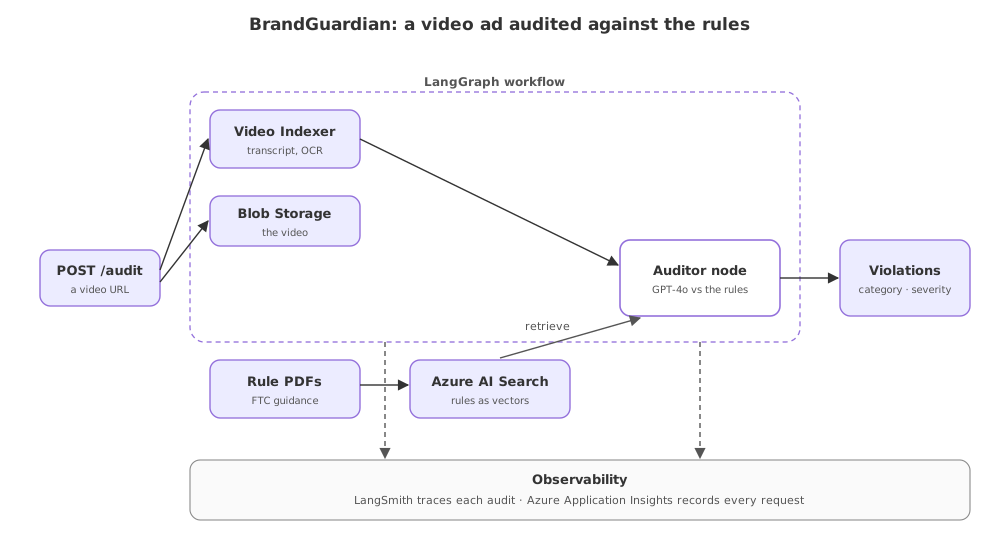
- A request comes in at a FastAPI endpoint with a video URL. The video skips a Streamlit UI by design, because a production backend is the part that matters.
- The video is processed into something a model can read: Azure Video Indexer pulls its transcript, the text on screen through OCR, and its metadata.
- The rules are retrieved from a knowledge base: the FTC PDFs, embedded and stored in Azure AI Search, queried for the passages that bear on this ad.
- An auditor model, GPT-4o on Azure, compares the ad against the retrieved rules and returns the violations it finds, each with a category, a severity and a description.
- Everything is watched: LangSmith traces the chain of thought, and Azure Application Insights records every request, its latency and its errors.
Why it is the course's capstone
- It is every lifecycle stage at once: a data pipeline, a model choice, a built workflow, evaluation of the output, deployment behind an API, and observability over the lot.
- It is multimodal: the input is a video, not text, so the data stage does real work before the model ever sees it.
- It is operated, not demoed: it has a knowledge base that is versioned, traces you can open, a latency you can measure and errors that are recorded.
Related
- Pick a short influencer video you have seen and list, in one line each, the rules an auditor would check it against.
- Sketch the five stages above as boxes and mark which one turns the video into text.
Little by little, you're building something great.